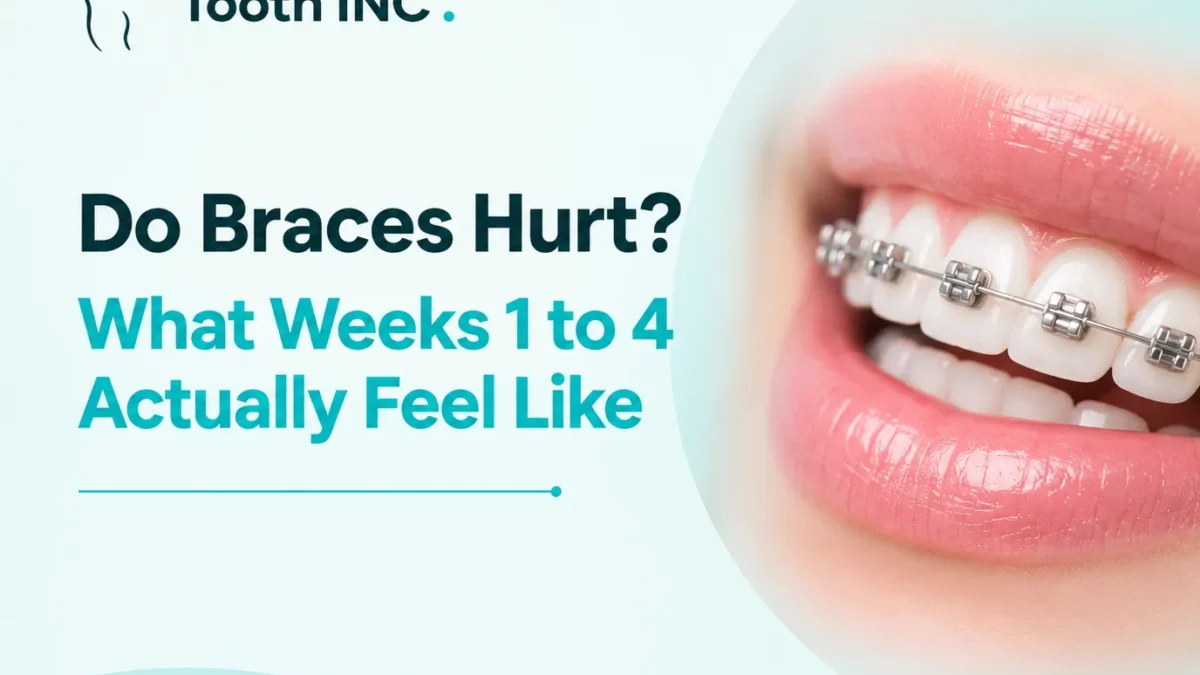
Braces do not hurt during the bonding appointment, because placing brackets requires no injections, no drilling, and no enamel cutting. However, mild to moderate tooth soreness typically begins four to six hours after the archwire is engaged and lasts for three to five days. When patients in Chandigarh ask do braces hurt, the clinical reality is that orthodontic discomfort arrives in brief, predictable waves rather than constant pain.
Understanding this timeline removes the anxiety surrounding fixed orthodontic care. Your teeth and gums adapt rapidly to gentle, continuous pressure. By the end of the first month, most teenagers and adults barely notice their brackets during daily conversation or meals.
At ToothInc in Sector 18-D, Chandigarh, Dr. Karan Seth (MDS Orthodontics & Dentofacial Orthopaedics) focuses on low-friction orthodontic systems and anxiety-free clinical care. Knowing what each week brings, and how to apply practical braces pain relief, helps you move through your braces the first week with complete confidence.
The Clinical Reality Behind Do Braces Hurt Concerns
The biological answer to do braces hurt lies in controlled inflammation within the periodontal ligament. When an orthodontic wire applies gentle pressure to a tooth, blood flow compresses slightly on one side of the root, triggering cellular signals that remodel the surrounding jawbone. This natural biological response causes temporary dull aching and biting tenderness.
Orthodontic tooth movement is a living process. Every tooth sits inside a bony socket, suspended by microscopic elastic fibres called the periodontal ligament. When your orthodontist threads a flexible nickel-titanium archwire through your brackets, the wire gently pulls or pushes teeth toward their planned positions.
This light force releases local chemical mediators, such as prostaglandins, which alert bone-remodelling cells to begin reshaping the socket. Because these same chemical signals stimulate local nerve endings, your teeth feel tender when you bite down.
It is helpful to distinguish between two different types of orthodontic sensations. The first is deep, dull pressure around the tooth roots, which signals that healthy bone remodelling is underway. The second is surface friction against the inner cheeks and lips, which happens as your soft tissues adjust to new metal or ceramic contours. Both sensations are temporary and manageable.
Day-by-Day Breakdown of the Braces First Week
The braces first week represents the main adjustment period of your entire orthodontic journey. Knowing how your mouth responds each day prevents surprises and helps you plan your meals and schedule around mild soreness.
Day 1: Bonding Day and Initial Tightness
The bonding appointment itself takes roughly 45 to 60 minutes and is entirely painless. Your orthodontist cleans your enamel, bonds each bracket with dental adhesive, and secures a thin, flexible archwire. Immediately after leaving the clinic, your teeth feel normal, though your lips may feel slightly fuller over the brackets.
About four to six hours later, as the archwire begins exerting steady pressure, a mild tightness sets in. Eating a soft dinner, such as dal, khichdi, or mashed vegetables, keeps your first evening comfortable.
Days 2 and 3: Peak Orthodontic Soreness
For most patients, discomfort peaks between 24 and 72 hours after placement. Your front and back teeth may feel tender when biting into firm food, and your gums might feel slightly bruised. This is the exact window when people wonder do braces hurt the most.
During these two days, the inner lining of your cheeks and lips may also notice the edges of the brackets. Drinking cold water and sticking to cool, soft meals soothes the periodontal ligament and keeps pressure off sensitive teeth.
Days 4 to 7: Rapid Relief and Soft-Tissue Adaptation
By day four or five, the initial inflammatory wave subsides noticeably. The dull ache fades, and chewing soft-to-medium foods becomes much easier. Your lips and cheeks begin forming a natural, protective toughening layer over the contact zones, similar to how a guitarist’s fingertips adapt to strings.
By the end of the braces first week, most patients sleep comfortably, speak clearly, and settle into their new brushing routine without disruption.
Week-by-Week Adaptation Timeline: Weeks 1 to 4
Tracking how symptoms evolve across the first month shows how quickly the human mouth adapts to fixed orthodontics.
| Timeline Phase | Primary Sensation | Typical Comfort Level | Eating & Daily Routine |
|---|---|---|---|
| Week 1 (Days 1–3) | Dull tooth pressure; biting tenderness | Moderate discomfort | Soft foods only (yoghurt, soups, khichdi, smoothies) |
| Week 1 (Days 4–7) | Fading ache; mild cheek rubbing | Mild discomfort | Soft-to-medium foods (pasta, idli, soft rotis) |
| Week 2 | Minimal tooth soreness; settling tissues | Comfortable | Normal braces-safe diet; chewing feels natural |
| Week 3 | No active pain; subtle tooth shifting | Very comfortable | Routine meals and effortless daily speech |
| Week 4 | First adjustment visit; brief 1–2 day ache | Mild, short-lived tightness | Soft meals for 24–48 hours after wire tightening |
Week 2: Settling Into Normalcy
By the start of the second week, the acute pressure from your braces first week has largely disappeared. Your periodontal ligaments have adapted to the initial archwire, and biting down no longer triggers sharp twinges.
Any minor mouth ulcers or irritated spots on the inside of your cheeks usually heal completely during week two. Your tongue and lips now move smoothly around the brackets without catching. Speech returns to normal, and most patients stop thinking about their braces during work meetings or school classes.
During week two, you can safely expand your diet to include most braces-friendly Indian and continental meals. Cutting crisp fruits, parathas, or sandwiches into small bite-sized pieces lets you chew comfortably with your back molars whilst protecting your front brackets.
Week 3: Silent Progress and Daily Routine
Week three is typically the most comfortable phase of your first month. At this point, the initial archwire has delivered most of its active force, and your teeth are moving quietly along their planned path.
Many patients look in the mirror during week three and notice the first subtle signs of straightening, especially in rotated front teeth. Because there is virtually no soreness, people who initially worried do braces hurt throughout treatment realise that the vast majority of orthodontic care is completely pain-free.
This calm phase is the ideal time to perfect your oral hygiene habits. Using an angled orthodontic toothbrush, interdental proxy brushes, and a water flosser takes only a few extra minutes each evening and keeps your gums healthy ahead of your first adjustment visit.
Week 4: Your First Orthodontic Adjustment
Around week four to week six, depending on your bracket system, you return to your orthodontist for your first routine adjustment. During this visit, the specialist evaluates your tooth movement, replaces worn elastic ties, or upgrades you to a slightly firmer archwire to continue guiding your alignment.
Because a new wire introduces fresh biological pressure, you may feel a brief return of mild tightness four to six hours after the visit. However, adjustment soreness is significantly milder and shorter than your braces first week. Most patients experience light tenderness for just 24 to 48 hours before returning to full comfort.
Patients wearing low-friction systems, such as Damon or Pitts 21 self-ligating brackets, often enjoy longer intervals of eight to ten weeks between adjustments, reducing how frequently they experience post-tightening tenderness.
Proven Strategies for Braces Pain Relief at Home
Managing temporary orthodontic tenderness does not require complex remedies. Simple, clinically backed steps deliver fast braces pain relief during your first few days and after routine adjustments:
- Apply Orthodontic Wax Immediately: Dry the irritating bracket with a clean tissue, roll a pea-sized piece of silicone orthodontic wax between your fingers, and press it firmly over the rough edge to create a smooth cushion.
- Rinse with Warm Salt Water: Dissolve half a teaspoon of table salt in a glass of warm water and swish gently for 30 seconds twice daily to calm inflamed gums and heal minor cheek abrasions.
- Use Cold Therapy: Sipping chilled water, eating plain yoghurt, or holding a cold compress against the outer cheek for 10 minutes constricts local blood vessels and numbs sore tooth roots.
- Follow a Soft-Food Menu: Choose nutrient-rich soft options like dal-chawal, scrambled eggs, paneer bhurji, oats, bananas, and smoothies during days two and three to avoid biting pressure.
- Consider Over-the-Counter Relief: If dull aching disrupts your sleep during the braces first week, a standard dose of paracetamol or an orthodontist-approved analgesic typically resolves the discomfort quickly.
How Different Bracket Systems Influence Comfort
Not all orthodontic appliances feel identical in the mouth. When patients ask do braces hurt, the specific bracket design and wire technology play a measurable role in overall comfort.
Traditional metal braces use elastic rings to tie the archwire into each bracket. These elastic ties create friction, requiring slightly higher initial forces to start tooth movement. Self-ligating systems, such as Damon metal, Damon Clear, and Pitts 21 brackets, replace rubber bands with a smooth built-in sliding door. Clinical evidence suggests that lower friction allows teeth to move under lighter, gentler forces, which may reduce post-adjustment soreness.
Ceramic braces offer a tooth-coloured aesthetic with smooth, rounded edges that feel gentle against the lips. Clear aligners such as Invisalign eliminate metal brackets altogether, removing cheek friction completely, though patients still feel brief pressure for one to two days whenever they switch to a fresh aligner tray.
Normal Soreness vs Mechanical Issues Requiring a Clinic Visit
Knowing the difference between expected orthodontic pressure and a genuine mechanical issue keeps your treatment safe and stress-free. Normal soreness feels like a dull, symmetrical ache across several teeth when biting, and it steadily improves after day three.
Conversely, sharp, stabbing pain localised to a single spot is never normal. If an archwire slides out of a back molar tube and pokes your inner cheek, or if a bracket detaches from the enamel after biting into something hard, no amount of waiting will resolve the irritation.
- Poking Back Wire: Cover the sharp wire end with a generous ball of orthodontic wax and call your clinic for a quick, five-minute wire trim.
- Loose or Spinning Bracket: Leave the bracket on the wire, secure it temporarily with wax so it does not rub your lip, and schedule a repair visit.
- Persistent Severe Pain: If tooth pain worsens after day five or is accompanied by visible gum swelling, contact your orthodontist promptly for an evaluation.
Gentle, Anxiety-Free Orthodontics at ToothInc Chandigarh
Managing orthodontic comfort begins long before brackets touch your teeth. At ToothInc, located in Sector 18-D, Chandigarh, Dr. Karan Seth (MDS Orthodontics & Dentofacial Orthopaedics) combines modern low-force mechanics with a calm, boutique clinical environment designed to eliminate dental anxiety.
Rather than using messy impression molds that trigger gag reflexes, ToothInc captures high-definition 3D and 5D digital dental scans to plan your bite accurately. The clinic offers a full spectrum of comfort-focused appliances, including Damon self-ligating braces, Pitts 21 brackets, ceramic braces, Incognito hidden braces, and Invisalign clear aligners. With curated playlists, gentle clinical protocols, and clear braces pain relief guidance, every visit feels relaxed and predictable.
Conclusion
Understanding the real timeline behind do braces hurt empowers you to start orthodontic treatment without fear. Whilst the braces first week brings three to five days of mild biting tenderness and cheek adaptation, those sensations fade quickly as your mouth adjusts. By week two and week three, daily life returns to normal, and your teeth continue aligning quietly in the background. Pairing simple braces pain relief habits, such as orthodontic wax, warm saltwater rinses, and soft foods, with specialist-led care ensures a smooth, comfortable path to a healthy smile.
Schedule Your Orthodontic Consultation at ToothInc Chandigarh
Ready to explore comfortable, modern braces tailored to your lifestyle? At ToothInc in Sector 18-D, Chandigarh, Dr. Karan Seth and the specialist team walk you through every step of your alignment journey using advanced 3D digital diagnostics.
Book your orthodontic consultation at ToothInc today to discuss low-friction braces, clear aligners, and personalised comfort planning in a calm, modern clinic setting.
Frequently Asked Questions
Do braces hurt when the orthodontist first puts them on?
No, getting braces bonded is completely painless and requires no injections or drilling. Mild tooth soreness typically begins four to six hours later once the archwire starts applying gentle pressure to your teeth.
How long does discomfort last during the braces first week?
Tooth tenderness usually peaks between days two and three of your braces first week. By day five to day seven, the dull ache fades significantly, and your cheeks adapt comfortably to the brackets.
What works fastest for braces pain relief at home?
Applying orthodontic wax over rubbing brackets, rinsing with warm salt water, eating cold soft foods like yoghurt, and taking an orthodontist-approved dose of paracetamol provide reliable, fast braces pain relief.
Do braces hurt more after monthly tightening appointments?
Adjustment visits cause mild tightness for 24 to 48 hours as a new wire engages. However, this brief soreness is noticeably lighter and shorter than the initial adjustment period during your first week.
Can you eat normal Indian food during the braces in the first week?
Yes, soft Indian staples such as dal-chawal, khichdi, curd rice, idli, upma, paneer bhurji, and soft rotis soaked in gravy are ideal during your braces in the first week. Avoid hard nuts, chikki, and crunchy snacks.
Do braces hurt when they are finally removed?
Removing braces is quick and generally painless. You will feel light pressure and a brief popping sensation as the orthodontist gently detaches each bracket and polishes away the remaining dental adhesive.