

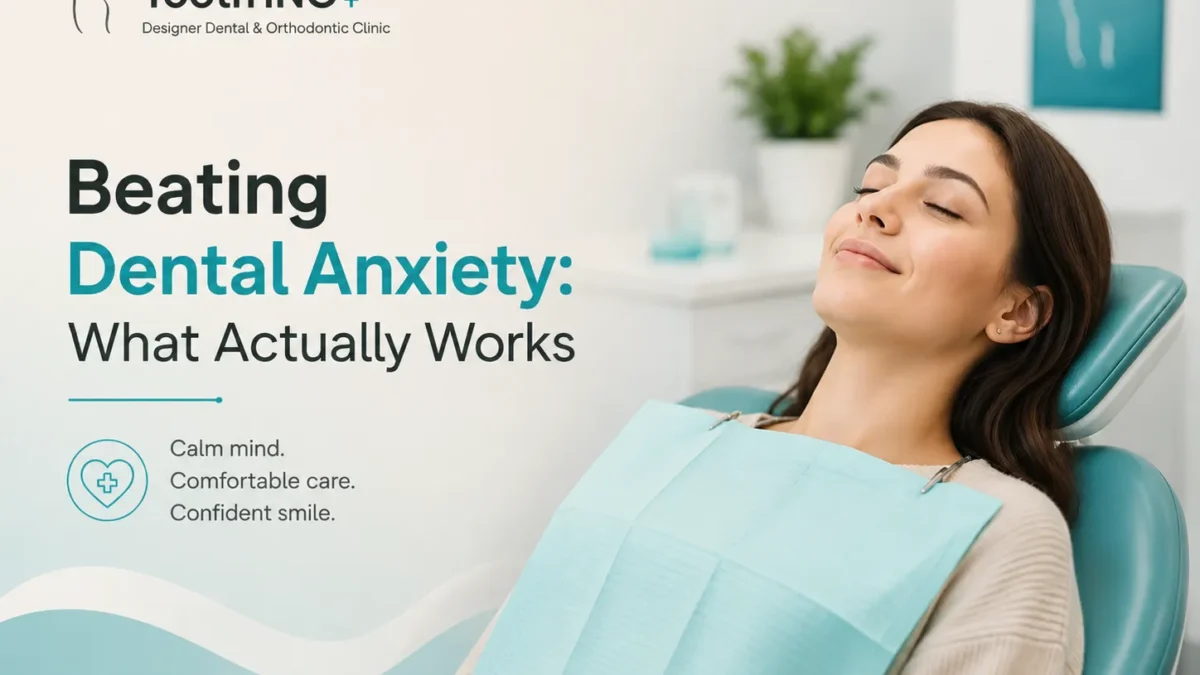
For many people in Chandigarh, the thought of a dental problems brings a wave of unease. If that sounds like you, please know you are not alone. Dental anxiety is one of the most common reasons people delay or skip dental care. Research suggests around 15% of adults worldwide live with a real fear of dental visits and therefore beating dental anxiety gets difficult.
The good news is simple. This fear can be managed, and modern dentistry has made visits calmer than ever. In this guide, we look at what actually works, from small self-help habits to gentle professional support. The goal is a smile you never have to hold back.
Understanding Dental Anxiety and Why It Happens
Dental anxiety is the feeling of worry, nervousness, or dread linked to a dental visit. It is mild for some people and overwhelming for others. This fear rarely appears from nowhere. It is usually learned over time.
Common roots of dental anxiety include:
- A painful or rushed dental visit in the past
- The sound of the drill or strong clinical smells
- Fear of needles or injections
- A feeling of losing control while in the chair
- Scary stories heard from family or friends
Knowing your own trigger is the first step. Once you understand what sets off your fear of the dentist, it becomes far easier to deal with.
Common Signs and Triggers Behind Fear of the Dentist
Dental anxiety shows up differently for each person. Some feel a mild flutter. Others cannot sleep the night before an appointment.
Watch out for these common signs:
- Trouble sleeping before a dental appointment
- A racing heart while sitting in the waiting room
- Feeling uneasy or sick at the thought of treatment
- Putting off appointments again and again
A little nervousness is completely normal. But a strong, ongoing fear of the dentist can quietly harm your oral health. Skipped visits often turn small issues into painful, bigger ones.
Proven Ways to Manage Dental Anxiety
Here is the reassuring part. Several methods are backed by research and work well for most people. Managing this fear does not always need medicine. Often, a few simple steps make a real difference.
Talk Openly With Your Dentist First
Honesty is powerful. Tell your dentist exactly what worries you. A caring dentist will slow down, explain each step, and agree on a signal to pause. This sense of control eases those nerves more than most people expect.
Relaxation and Breathing Techniques
Slow, deep breathing calms the nervous system. Try breathing in for four counts and out for six. A few more habits that help:
- Progressive muscle relaxation before your visit
- Guided imagery, picturing a calm and happy place
- A short meditation or mindfulness break in the waiting area
Studies show these relaxation methods lower anxiety and are easy to practise on your own.
Distraction That Keeps You Comfortable
Distraction gently shifts your focus away from the treatment. Music is one of the best tools. Bring your headphones and a favourite playlist. Calm, modern clinics in Chandigarh often offer this as standard, and a pleasant scent in the room can settle nerves too.
Gradual Exposure, One Small Step at a Time
You do not have to fix everything in one sitting. Start with a simple check-up or cleaning. Each positive visit builds confidence. Over time, this step-by-step approach retrains your mind to feel safe in the dental chair.
Dental Anxiety Treatment for Deeper Fears
Sometimes self-help is not enough, and that is perfectly okay. For stronger fears, professional dental anxiety treatment offers reliable support. Two evidence-based options stand out:
- Cognitive behavioural therapy (CBT): This has the strongest research support. It helps you challenge fearful thoughts and replace them with calmer ones.
- Sedation options: These help you stay relaxed during the actual procedure.
Your dentist will guide you toward the right mix based on your comfort level and the treatment you need.
Sedation Dentistry for Nervous Patients
Sedation dentistry uses safe medication to help anxious patients stay calm during treatment. It is a trusted choice for moderate to severe cases. Common forms include:
- Nitrous oxide, often called laughing gas, for mild and conscious relaxation
- Oral sedation, for moderate anxiety during longer procedures
- IV sedation, the deepest conscious option, usually kept for severe dental phobia
If you are exploring sedation dentistry in Chandigarh, always choose a qualified clinic with proper monitoring. A specialist-led team keeps every sedation session safe and comfortable.
Dental Phobia and the Severe Side of Dental Anxiety
When fear becomes extreme and leads to complete avoidance, it may be dental phobia. This is a more intense form of dental anxiety. People with dental phobia may avoid the dentist for years.
The result is often pain, infection, or tooth loss that could have been prevented. If this sounds familiar, please do not feel ashamed. Dental phobia is common and very treatable. A patient, understanding dental team can help you rebuild trust at your own pace.
Ready for Calm, Comfortable Dental Care in Chandigarh
At ToothInc in Sector 18, Chandigarh, we designed our clinic to remove the dread from dentistry. From a calming space and your own playlist to gentle, specialist-led care, every detail helps ease dental anxiety.
You deserve dental care that feels safe and unhurried. Book a friendly consultation today and take the first step toward a smile you never have to hold back. Call or book online.
Conclusion
Dental anxiety is real, common, and completely manageable. You do not have to let fear control your oral health.
Start small. Talk to your dentist, try simple relaxation habits, and lean on proven dental anxiety treatment when you need it. With the right support, the dental chair can feel a whole lot friendlier.
Frequently Asked Questions
Is dental anxiety normal?
Yes, dental anxiety is very common. Research suggests around 15% of adults worldwide feel a real fear of the dentist, so you are certainly not alone in this.
Can dental anxiety be cured completely?
Many people overcome dental anxiety fully. Relaxation, gradual exposure, and CBT, combined with a gentle dental team, can reduce or remove the fear over time.
What is sedation dentistry used for?
Sedation dentistry helps anxious patients stay relaxed during treatment. It ranges from mild laughing gas to deeper IV sedation for severe dental phobia and complex procedures.
How do I stop being scared of the dentist?
Start with an open chat about your worries. Try breathing exercises, bring music for distraction, and book short, positive visits to slowly ease your fear of the dentist.
Is sedation dentistry safe?
Yes, sedation dentistry is safe when handled by trained professionals with proper monitoring. Always pick a qualified, specialist-led clinic for any dental anxiety treatment involving sedation.
When should I see a dentist for dental phobia?
See a dentist soon if fear makes you avoid care completely. Early support prevents bigger problems and helps you manage dental phobia before it harms your teeth.