

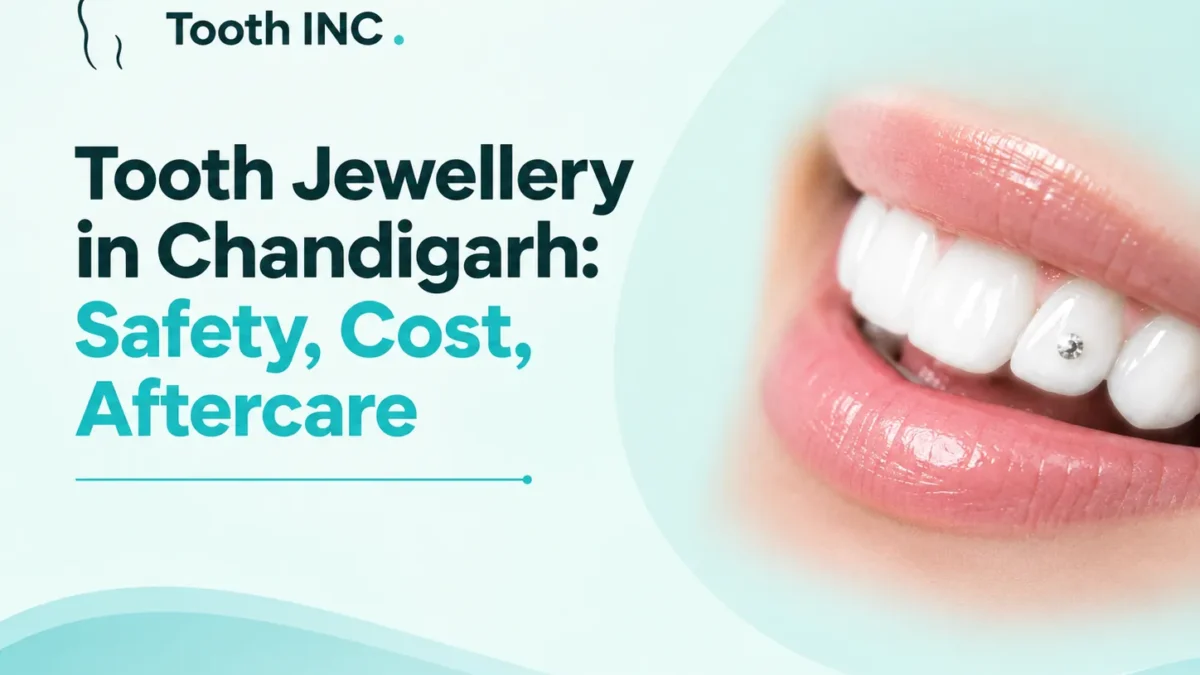
Dental accessories provide a temporary way to accentuate a smile without invasive tooth preparation. Professional tooth jewellery in Chandigarh utilizes medical-grade bonding agents to fix crystals, diamonds, or gold motifs to natural enamel without drilling or discomfort.
When placed by a licensed dental professional, the procedure preserves enamel integrity. Modern cosmetic clinics apply these accessories using conservative bonding steps similar to orthodontic bracket attachment. Patients throughout the Tricity region evaluate materials, attachment methods, oral hygiene steps, and maintenance routines when considering dental embellishments.
Understanding the clinical approach helps patients choose quality accessories that protect their enamel. ToothInc in Sector 18-D provides cosmetic evaluations that ensure tooth surfaces remain healthy before, during, and after ornament placement.
Clinical Safety of Tooth Jewellery in Chandigarh
Professional application of tooth jewellery in Chandigarh requires zero drilling, zero enamel cutting, and zero local anesthesia. The dentist conditions the enamel surface with a mild etching solution, applies an adhesive bonding agent, positions the jewel, and cures it with a blue light.
This non-invasive approach leaves the underlying tooth structure completely intact. Because the crystal or gold piece bonds solely to the outer layer of enamel, nerve tissue is never exposed. Patients experience no sensitivity during or after the procedure. If the wearer decides to remove the ornament later, a dentist can detach it and polish the enamel back to its natural smoothness without leaving permanent marks.
Conversely, over-the-counter DIY kits pose severe risks to dental health. Commercial glue products often contain industrial chemicals that erode enamel or trigger toxic reactions in oral tissues. At-home application frequently creates uneven ledges that harbor pathogenic bacteria, increasing the risk of localized tooth decay. Receiving treatment in an accredited dental clinic ensures sterile protocols, dental-grade adhesives, and biocompatible materials.
Core Materials Used in Contemporary Dental Jewellery
Cosmetic dentistry utilizes certified, biocompatible materials engineered to withstand the warm, moist, and enzymatically active environment of the human mouth. Dental jewels must feature flat, lead-free backing plates designed specifically for dental adhesion.
High-grade crystals, such as authentic Swarovski elements, are processed with special foil backings that reflect light while bonding securely to dental composite resin. These glass-based crystals retain optical clarity for months without becoming cloudy from saliva or daily brushing.
Patients seeking alternative accents often select gold studs or cast shapes. High-karat yellow and white gold alloys resist tarnish and maintain high biocompatibility with adjacent lips and mucosal tissues. Natural diamonds intended for oral bonding are cut with flat bases, ensuring low-profile integration that does not rub against the inner lip.
Technical Comparison of Enamel Accent Options
| Feature | Dental Crystals | Gold Studs & Motifs | Natural Diamond Accents |
| Material Base | Lead-free crystal glass with foil backing | 18k or 22k biocompatible gold alloy | Calibrated natural or lab diamond |
| Enamel Alteration | None; additive resin bonding | None; surface adhesive bonding | None; flat-back surface placement |
| Average Retention | 6 to 24 months | 12 to 36 months | 12 to 36 months |
| Plaque Accumulation Risk | Low to moderate around perimeter | Low; smooth metallic contours | Low to moderate around faceted edges |
| Removal Reversibility | Immediate debonding with surface polish | Immediate debonding with surface polish | Immediate debonding with surface polish |
Professional Application Protocol for Teeth Jewellery in Chandigarh
The clinical procedure for applying teeth jewellery in Chandigarh is straightforward, painless, and completed in a single visit. Dental professionals complete the treatment in roughly fifteen to twenty minutes following strict adhesive dentistry standards.
First, the dentist examines the selected tooth to ensure the enamel is intact and free of untreated decay or active tartar. The tooth surface is cleaned with a fluoride-free pumice paste to remove the salivary pellicle. Moisture control is established using cotton rolls or cheek retractors, as dry enamel is mandatory for successful adhesion.
Second, a 37 percent phosphoric acid etching gel is applied to the pinpoint target location for fifteen to twenty seconds. This mild acid creates microscopic pores within the enamel rods without damaging the tooth matrix. The site is rinsed with water and dried completely.
Third, a clinical bonding liquid is brushed onto the etched zone and cured with a specialized light. The clinician applies a minute droplet of flowable dental resin to the back of the gem. Using a placement tool, the jewel is positioned on the enamel surface. The dentist removes any excess resin from the borders to prevent plaque traps. A light-emitting diode (LED) curing unit hardens the material in twenty to forty seconds.
Key Clinical Factors Influencing Treatment Cost
The overall financial investment for dental accessories varies depending on several clinical and material considerations rather than a flat commercial charge. A personalized diagnostic evaluation helps clarify the specific variables involved in your appointment.
- Ornament Composition and Quality: Genuine lead-free crystals, certified dental gems, high-karat gold studs, and certified natural diamonds carry different manufacturing values.
- Tooth Surface Preparation Needs: Patients with surface stains, plaque buildup, or minor enamel roughness may require professional scaling or polishing before adhesive bonding can occur.
- Placement Complexity: Aligning multiple gems into intricate geometric patterns or securing motifs on customized teeth requires additional chair time and precise resin sculpting.
- Clinical Expertise and Sterilization Standards: Treatment by licensed specialists using medical-grade LED equipment, certified dental adhesives, and strict sterilization protocols ensures long-term safety.
Enamel Health and Candidacy Considerations
Although dental ornaments do not harm healthy enamel, clinical suitability requires an initial oral assessment. Not every tooth surface is appropriate for resin-bonded gems.
Dentists generally place jewels on upper lateral incisors, central incisors, or canines where they are visible during a smile. The recipient tooth must feature intact natural enamel. Restorations such as porcelain crowns, composite veneers, or acrylic dentures lack the microscopic prism structure needed for standard resin etching, making adhesive retention unreliable on artificial surfaces.
Patients with untreated gingivitis, active tooth decay, or severe enamel hypoplasia should resolve these dental conditions before exploring aesthetic accents. Additionally, individuals with severe overbites or night-grinding habits (bruxism) must undergo bite analysis to confirm that opposing lower teeth will not collide with the jewel during chewing.
Daily Aftercare Rules for Dental Jewellery in Chandigarh
Consistent daily maintenance ensures that your dental jewellery in Chandigarh remains secure, lustrous, and free of plaque buildup. Proper hygiene practices prevent bacteria from gathering around the perimeter of the resin bond.
- Observe the Initial Setting Period: Avoid eating hard or crunchy foods for the first twelve hours following placement to allow the adhesive resin to complete full chemical maturation.
- Maintain Meticulous Daily Brushing: Brush twice daily using a soft-bristled manual or electric toothbrush. Clean gently around the margins of the ornament to eliminate food particles.
- Avoid Abrasive Oral Products: Refrain from using charcoal toothpastes, stiff-bristled brushes, or abrasive whitening powders that might scratch the surface of crystals or dull gold motifs.
- Practice Mindful Eating Habits: Avoid biting directly into hard objects such as ice cubes, hard candies, bone fragments, or pens, which exert lateral shear forces that can dislodge the jewel.
- Attend Routine Cleanings: Visit your dentist every six months for routine maintenance. The dental team can clean around the jewel with ultrasonic scalers and check bond integrity.
Professional Removal and Replacement Protocol
One of the primary benefits of professional tooth jewellery is its reversibility. A patient can choose to remove an accent at any point without permanent changes to their tooth structure.
The removal procedure mimics the safe debonding of orthodontic braces. The dentist uses specialized debonding pliers or an ultrasonic scaler to break the resin seal gently. Once the jewel lifts off, residual composite resin remains on the enamel surface.
The clinician uses fine polishing burs and rubber cups with polishing paste to smooth away the leftover adhesive. This restores the enamel to its original sheen and texture. Attempting to pry, scrape, or pop off a dental jewel at home is dangerous and can fracture the underlying enamel. Professional removal preserves tooth structure and takes only five to ten minutes.
Aesthetic Oral Care at ToothInc Sector 18 Chandigarh
Cosmetic dental enhancements require clinical precision, artistic balance, and strict hygienic protocols. Located in Sector 18-D, ToothInc provides focused cosmetic and orthodontic services in an anxiety-free clinic setting. Led by Dr. Karan Seth (MDS Orthodontics & Dentofacial Orthopaedics), the clinic approaches cosmetic detailing with an understanding of dental anatomy and facial harmony.
ToothInc eliminates the clinical stress commonly associated with dental appointments. The facility features curated ambient spaces, quiet treatment rooms, and medical-grade sterilization systems. Whether patients seek discreet orthodontic care, digital diagnostics, or certified dental embellishments, ToothInc prioritizes long-term oral health and patient comfort throughout every step.
Frequently Asked Questions
1. Does getting tooth jewellery hurt or require drilling?
No, professional placement causes no pain and requires zero drilling. The jewel bonds to the surface enamel using safe dental adhesives, leaving natural tooth structure intact.
2. How long does a dental jewel typically stay attached?
A professionally placed tooth jewel typically remains attached from six months up to two or three years, depending on your diet, biting habits, and daily oral hygiene routines.
3. Can you still brush and floss normally with tooth jewellery?
Yes, you can brush and floss normally without disrupting the jewel. In fact, keeping the area clean with a soft toothbrush prevents plaque from building up around the base.
4. What happens if you accidentally swallow a tooth jewel?
If an ornament becomes loose and is swallowed, it usually passes harmlessly through the digestive tract because dental crystals and gold studs are small, smooth, and biocompatible.
5. Can tooth jewellery be safely removed at any time?
Yes, a dentist can remove the jewel at any time using gentle orthodontic instruments. The enamel is then polished clean, leaving the tooth in its original condition.
Schedule a Cosmetic Evaluation at ToothInc Chandigarh
Adding a subtle, sparkling accent to your smile is simple when performed by licensed dental professionals. Prioritizing certified materials, clinical bonding techniques, and routine aftercare protects your enamel while enhancing your smile.
Book a consultation with Dr. Karan Seth and the team at ToothInc in Sector 18-D, Chandigarh. Our clinic combines digital evaluations with comfortable care to help you discover the ideal aesthetic choices for your smile.