

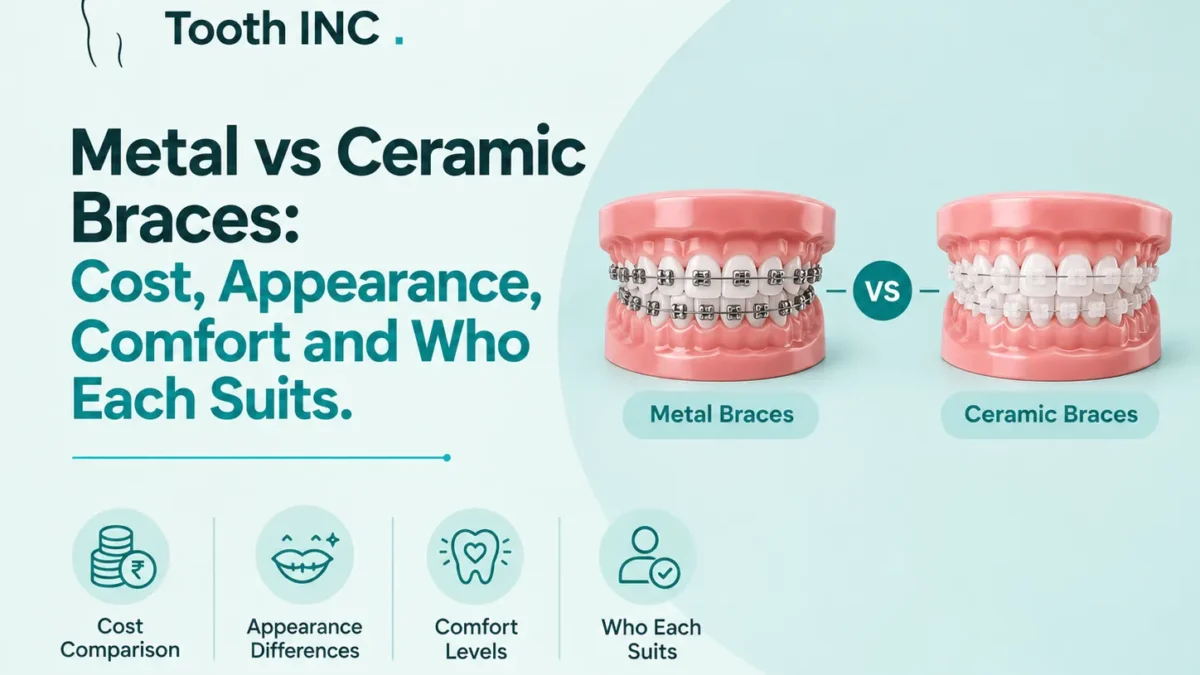
Choosing the right orthodontic solution is an important milestone toward achieving a balanced, healthy bite and a confident smile. When comparing metal vs ceramic braces, patients often weigh aesthetic discretion against overall durability and financial commitment. Both options correct complex misalignments, crowded teeth, and bite irregularities with high clinical precision. However, understanding the exact differences in metal vs ceramic braces helps you select the appliance that fits your daily lifestyle, profession, and personal comfort.
Modern orthodontics offers advanced choices ranging from classic stainless steel systems to clear metal braces and tooth-coloured alternatives. At Toothinc in Sector 18, Chandigarh, orthodontic treatments are designed to combine high-precision clinical mechanics with patient-centric aesthetics.
Metal vs Ceramic Braces: Structural Build and Working Mechanism
Fixed orthodontic systems use brackets bonded to teeth, connected by archwires to guide movement over time. While both appliances function similarly, their composition sets them apart.
- Metal Braces: Crafted from high-grade stainless steel, traditional metal systems offer exceptional strength and resilience. They withstand intense chewing forces and deliver reliable torque control for severe misalignments.
- Ceramic Braces: Made from polycrystalline or monocrystalline ceramic material, these blend seamlessly with natural tooth enamel. They are designed for individuals seeking aesthetic subtlety without compromising orthodontic correction.
Evaluating metal vs ceramic braces ensures you balance long-term clinical efficiency with your daily aesthetic preferences.
Appearance and Aesthetics of Transparent Braces
Aesthetic discretion remains the primary reason patients choose tooth-coloured or transparent braces over traditional systems.
- Visibility: Traditional metal brackets stand out against natural enamel, creating the classic orthodontic look. In contrast, transparent braces and ceramic brackets mimic tooth shades, making them significantly less noticeable in social, academic, or professional interactions.
- Discreet Archwires: Many patients pair ceramic brackets with frosted or tooth-toned wires, creating refined clear metal braces setups that remain subtle from a speaking distance.
- Stain Resistance: While modern ceramic brackets do not stain, clear elastic ties may discolour if exposed to heavily pigmented foods or beverages. Maintaining routine hygiene prevents discolouration between adjustment visits.
Evaluating Ceramic Braces Price and Cost Factors
The overall financial investment represents another primary difference between orthodontic systems. In general, the ceramic braces price sits higher than traditional metal brackets due to specialized materials and fabrication processes.
Several key factors determine the overall ceramic braces price and total treatment investment:
- Complexity of Malocclusion: Severe crowding, rotated teeth, or major skeletal bite corrections require extended treatment timelines and more frequent adjustments.
- Material Grade: High-grade monocrystalline sapphire or ceramic brackets involve higher manufacturing costs than standard stainless steel brackets.
- Treatment Duration: Extended orthodontic journeys require more chairside appointments, wire replacements, and routine monitoring.
- Specialist Supervision: Treatment guided by experienced orthodontic specialists ensures safer, biologically sound tooth movement and customized biomechanics.
During your clinical evaluation at Toothinc, your orthodontist provides a clear, personalized breakdown of treatment scopes so you can make an informed choice with no unexpected surprises.
Comfort, Durability, and Daily Maintenance
When analyzing metal vs ceramic braces, everyday wearability and strength play essential roles in overall satisfaction.
- Physical Comfort: Stainless steel brackets feature compact profiles that reduce initial lip and cheek irritation. Ceramic brackets are slightly bulkier to ensure structural strength, though their rounded, polished contours offer smooth tissue contact.
- Structural Durability: Metal systems excel in durability and rarely chip or fracture under intense chewing pressure. Ceramic appliances require gentle care, particularly when consuming crunchy or hard foods.
- Oral Hygiene Demands: Because transparent braces rely on clear ligatures, patients must practice dedicated brushing and post-meal rinsing to maintain an immaculate appearance throughout their treatment.
Who Each Orthodontic Option Suits Best
Selecting the right appliance depends on age, routine lifestyle, career demands, and personal aesthetic goals.
Traditional Metal Braces Are Ideal For:
- Children, teenagers, and active young adults who prioritize durability over aesthetics.
- Severe malocclusions requiring significant mechanical force and bite adjustments.
- Patients seeking the most budget-friendly, low-maintenance fixed orthodontic system.
Ceramic and Transparent Braces Are Ideal For:
- Working professionals, university students, and adults in client-facing roles.
- Individuals wanting full orthodontic control without prominent metallic brackets.
- Patients committed to thorough oral hygiene and dietary care during their smile transformation.
Learn about zirconia and PFM crowns’ material composition and structural differences.
Transform Your Smile with Specialist Care at Toothinc Chandigarh
Your orthodontic journey should feel calm, precise, and tailored to your unique facial profile. Located in Sector 18, Chandigarh, Toothinc combines evidence-based orthodontic expertise led by Dr. Karan Seth with a boutique, anxiety-free clinical atmosphere. Whether you are considering traditional appliances, customized clear metal braces, or ceramic systems, our team ensures every step of your alignment journey is comfortable, transparent, and built for lasting oral health.
Book your consultation at Toothinc today and take the first step toward a straight, confident smile.
Conclusion
Choosing between traditional metal systems and tooth-coloured alternatives ultimately depends on aligning your treatment priorities with your daily lifestyle. If you value unmatched durability, lower maintenance, and a time-tested approach for complex bite corrections, stainless steel brackets remain the gold standard. On the other hand, if professional discretion, subtle aesthetics, and a natural look during social interactions take precedence, ceramic and transparent braces provide the ideal balance of performance and visual subtlety.
Both orthodontic paths offer reliable, life-changing results when planned under skilled clinical supervision. A comprehensive consultation at Toothinc helps determine the right appliance for your specific dental anatomy, ensuring a smooth, comfortable, and confident transformation from day one.
Frequently Asked Questions
1. How does treatment time differ between metal vs ceramic braces?
Treatment duration is generally similar for both options, typically ranging from 18 to 30 months depending on your case complexity and bite alignment needs.
2. Do transparent braces stain over time with regular use?
Modern ceramic brackets resist stains, but clear elastic ties can discolour from tea, coffee, or turmeric. These elastics are routinely replaced during adjustment visits.
3. Why is the ceramic braces price higher than metal braces?
Ceramic appliances utilize specialized, tooth-coloured materials and advanced manufacturing to deliver aesthetic discretion, making the overall material and clinical cost higher.
4. Are clear metal braces as strong as traditional stainless steel brackets?
Yes, systems utilizing hybrid clear brackets with reinforced metal slots deliver robust structural strength while maintaining an understated aesthetic profile.
5. Can ceramic brackets treat severe dental crowding and bite issues?
Yes, ceramic systems use the same biomechanical principles as metal brackets, making them effective for correcting complex crowding, spacing, and bite alignment.