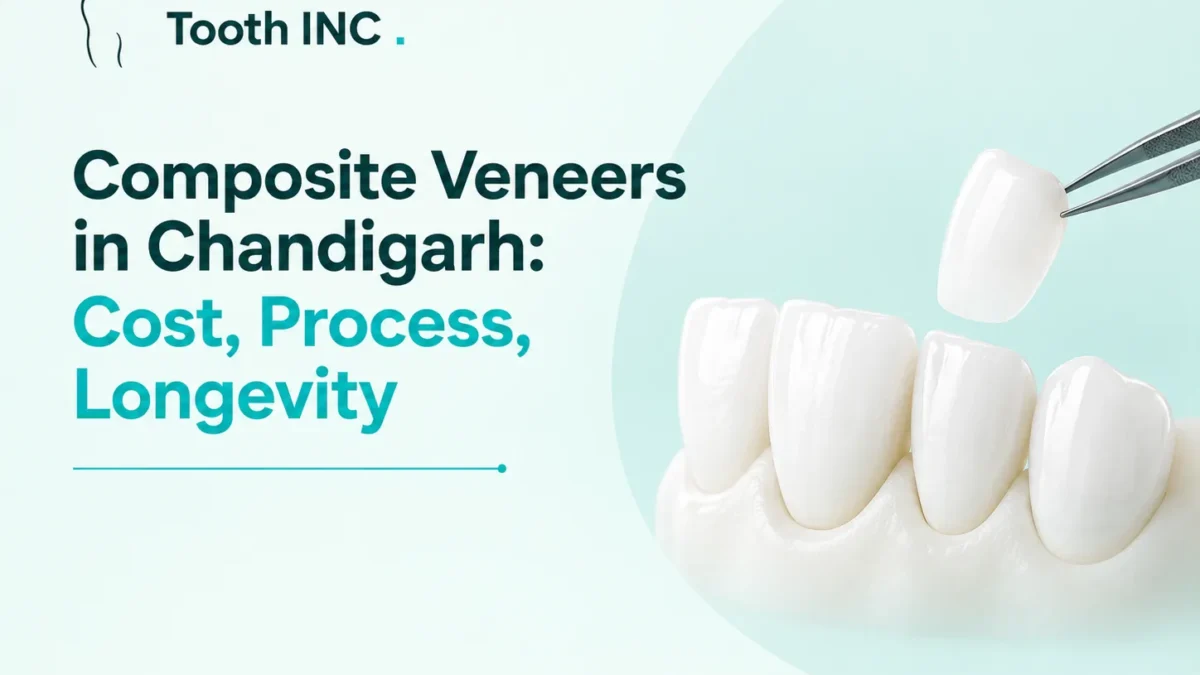
A balanced, luminous smile elevates your self-confidence, personal presence, and aesthetic appeal. When looking to correct chipped edges, persistent discoloration, or uneven tooth gaps, choosing composite veneers in Chandigarh provides an immediate, minimally invasive cosmetic solution. Modern resin bonding allows patients to achieve a refined smile makeover without aggressive tooth reduction.
Cosmetic dentistry across the Tricity region has progressed toward conservative, biology-preserving treatments. Direct resin veneers allow cosmetic dentists to sculpt, shape, and polish biocompatible materials directly over natural tooth enamel in a single clinical visit.
For residents seeking care from the best cosmetic dentist for veneers in Chandigarh, clinics such as ToothInc in Sector 18 blend digital diagnostics with artistic chairside layering. This ensures your customized smile enhances your natural facial symmetry and dental health.
Understanding Composite Veneers in Chandigarh for Smile Design
Direct composite laminates consist of specialized, high-density hybrid micro-fill resins blended with ceramic nanoparticles. Unlike indirect restorations fabricated off-site in a commercial dental laboratory, composite resin is applied directly to the prepared enamel surface by the clinician.
Opting for direct composite restorations allows patients to fix aesthetic imperfections while preserving sound tooth structure. The clinician blends translucent and opaque composite layers to replicate the optical properties of natural dentin and enamel.
Patients comparing options across the Tricity often explore both direct composite resin and indirect ceramic restorations. Understanding how material properties, clinical technique, and oral habits influence results helps you choose the treatment that matches your aesthetic and functional expectations.
Key Clinical Factors Influencing Veneer Treatment Cost
The overall financial investment for cosmetic smile enhancement varies based on several personalized clinical factors rather than a single fixed rate. Because each smile presents unique anatomical demands, an initial consultation and digital smile evaluation determine the final scope of treatment.
- Number of Teeth Involved: Treating two front incisors to repair localized chipping requires different resources than a full aesthetic smile design spanning six to eight anterior teeth.
- Surface Preparation and Enamel Conditioning: Teeth with intrinsic discoloration or slight crowding may require delicate enamel reprofiling or pre-treatment whitening to establish a uniform underlying shade.
- Resin Material Grade: Premium nano-hybrid and micro-filled composite formulations offer superior polish retention, lifelike translucency, and wear resistance compared to standard restorative resins.
- Clinician Expertise and Chairside Artistry: Direct resin placement requires specialized sculpting skills. Working with a dedicated smile designer ensures anatomical contouring that harmonizes with your lips and facial profile.
- Adjunctive Cosmetic Treatments: Some patients benefit from minor laser gingival contouring or preliminary alignment before veneer placement to achieve symmetrical gum margins.
The Step-by-Step Clinical Bonding Process
Achieving a natural, long-lasting resin restoration requires careful attention to clinical detail. The procedural journey generally follows four key stages:
Comprehensive Smile Evaluation and Shade Analysis
Your journey begins with high-definition digital photographs, intraoral scans, and facial harmony mapping. The cosmetic dentist evaluates your bite, jaw movements, and incisal edges. Using precise shade guides, the clinician selects complementary enamel, body, and translucent resin shades to match your surrounding dentition.
Conservative Enamel Preparation and Isolation
Direct composite bonding is exceptionally conservative. In many cases, no natural tooth structure needs to be removed. If required, the dentist gently buffs less than half a millimeter of surface enamel to create space for the material. The operative field is isolated using moisture-control barriers to ensure strong adhesive bonding.
Incremental Freehand Layering and Light Curing
The clinician applies a mild conditioning gel to open microscopic enamel pores, followed by a medical-grade bonding agent. The composite resin is placed in delicate, incremental layers. Deeper opaque layers mask underlying discoloration, while outer translucent layers mimic natural light transmission. A calibrated curing light hardens each layer in seconds.
Anatomical Contouring and High-Gloss Polishing
Once cured, the dentist uses fine diamond burs and flexible polishing discs to sculpt mamelons, developmental grooves, and natural tooth anatomy. Multi-step polishing pastes create a smooth, reflective surface that resists plaque buildup and matches the gloss of natural enamel.
Expected Longevity and Maintenance of Composite Restorations
With proper maintenance and routine clinical check-ups, high-grade direct composite restorations typically maintain their beauty and structural integrity for five to seven years. Because composite resins are slightly more porous than fired ceramics, their longevity depends directly on your daily habits and oral hygiene routine.
Patients who consume coffee, black tea, dark wines, or meals rich in staining spices should rinse with water afterward to prevent surface discoloration. Individuals who clench or grind their teeth during sleep should wear a custom-milled night guard to protect resin margins from micro-fractures.
Routine professional dental cleaning and yearly chairside repolishing maintain the material’s gloss and keep the margins smooth. If a composite veneer ever chips, your dentist can repair it directly in minutes without replacing the entire restoration.
Comparing Composite and Porcelain Restorations
| Feature & Clinical Trait | Composite Veneers | Porcelain Veneers |
| Primary Material | Nano-hybrid resin with silica particles | Laboratory-sintered feldspathic or lithium disilicate ceramic |
| Typical Treatment Time | Single clinical visit (Same-day transformation) | Two to three visits over one to two weeks |
| Enamel Preparation | Reversible; minimal to zero enamel removal | Irreversible; light surface enamel reduction required |
| Stain Resistance | Moderate; benefits from annual repolishing | High; glazed non-porous ceramic resists staining |
| Repair Capability | Easily repaired chairside in a single visit | Cannot be patched; fractured shells require laboratory remaking |
| Average Functional Lifespan | 5 to 7 years with good oral hygiene | 10 to 15+ years with consistent preventive care |
| Best Clinical Application | Minor chips, subtle gaps, younger patients, reversible designs | Major structural changes, deep staining, permanent smile makeovers |
Comparing Aesthetic Materials Across Chandigarh
When seeking the best veneers in Chandigarh, understanding the distinction between direct composite resin and laboratory-crafted porcelain veneers in Chandigarh is essential. Ceramic restorations, such as lithium disilicate (E-Max), are engineered in specialized dental laboratories from solid ceramic ingots. They offer unmatched surface luster, imperviousness to stains, and exceptional tensile durability, making them ideal for complete Hollywood smile makeovers.
However, composite laminates remain an appealing choice for patients desiring an immediate, conservative, and adaptable smile upgrade. Because composite bonding is largely additive, it preserves your natural enamel for the future.
Patients frequently choose composite options when they want a fast transformation for weddings or upcoming professional events without irreversible enamel shaving. Consulting an experienced cosmetic specialist helps determine which material suits your dental health, lifestyle, and aesthetic vision.
Aesthetic Candidates for Direct Resin Veneers
Direct resin bonding is versatile, but clinical suitability depends on the underlying health and alignment of your teeth. Ideal candidates include individuals with:
- Incisal Chipping and Uneven Wear: Restores natural tooth length and sharp incisal edges worn down by attrition or minor trauma.
- Persistent Enamel Discoloration: Effectively masks localized fluorosis, mild tetracycline banding, or developmental enamel hypoplasia that resists chemical teeth whitening.
- Midline Diastemas and Small Gaps: Closes spaces between front teeth predictably without orthodontic appliances.
- Peg Laterals and Microdontia: Reshapes undersized or misshapen lateral incisors to bring balance to the entire smile line.
- Minor Alignment and Rotational Irregularities: Creates the visual appearance of straight, uniform teeth when orthodontic alignment is not desired.
Artistic Smile Design at ToothInc Chandigarh
Exceptional cosmetic dentistry requires a balance of clinical skill, high-grade biomaterials, and an artistic eye. At ToothInc, located in Sector 18, Chandigarh, smile makeovers are treated as individual works of art. Led by Dr. Karan Seth (MDS), ToothInc approaches aesthetic restorations with digital planning, ensuring every composite veneer complements your facial contours, lip dynamics, and tooth proportions.
ToothInc provides a boutique, anxiety-free setting that changes the conventional dental experience. With tranquil interiors, relaxing music, and strict medical-grade sterilization, you can unwind while your smile is carefully crafted. Whether you choose direct composite laminates or premium custom porcelain veneers, our team delivers predictable, lifelike results that let you smile with confidence.
Frequently Asked Questions
1. Do composite veneers damage your natural teeth?
No, direct composite bonding is one of the most conservative cosmetic treatments. It requires minimal to zero enamel removal, preserving the natural structure and vitality of your underlying tooth.
2. How long does getting composite veneers take in the clinic?
Composite veneers are completed in a single appointment. Sculpting, curing, and polishing four to six teeth typically takes between two and four hours, giving you immediate smile results.
3. Can composite veneers be whitened if they stain over time?
Resin materials do not respond to chemical whitening gels once bonded. While surface stains can be removed during professional polishing, significant discoloration may require a fresh top layer of resin.
4. What should you avoid eating with composite veneers?
Avoid biting down directly on hard items like ice cubes, hard nuts, unpopped popcorn kernels, or non-food objects like pens. These habits can cause the composite edges to chip or fracture.
5. Can chipped composite veneers be easily fixed?
Yes, one of the greatest benefits of composite resin is repairability. If a small chip occurs, your cosmetic dentist can clean the area, apply new resin, and repolish the tooth in minutes.
Begin Your Smile Makeover at ToothInc Chandigarh
Your smile is one of your most valuable personal assets. Selecting composite veneers gives you a direct, enamel-preserving pathway to correcting cosmetic imperfections and enhancing your natural beauty. A personalized consultation with an experienced cosmetic team will help you evaluate your teeth, discuss your aesthetic goals, and choose the ideal approach for your smile.
Schedule your cosmetic evaluation with the specialist team at ToothInc in Sector 18, Chandigarh. Discover how artistic composite bonding can transform your smile with comfort and precision.