A confident, radiant smile transforms facial harmony, personal charisma, and oral health. When selecting the right orthodontic treatment, understanding the various types of braces helps you make an informed decision for your lifestyle. Modern orthodontics has progressed far beyond bulky metal fixtures. Patients across Chandigarh and the Tricity region now have access to discreet, aesthetic, and biomechanically efficient systems.
Whether you are exploring traditional stainless steel appliances, tooth-toned brackets, or invisible aligners, every system serves a distinct clinical purpose. Specialist clinics like ToothInc in Sector 18, Chandigarh, prioritize facial balance and bite function alongside aesthetic results.
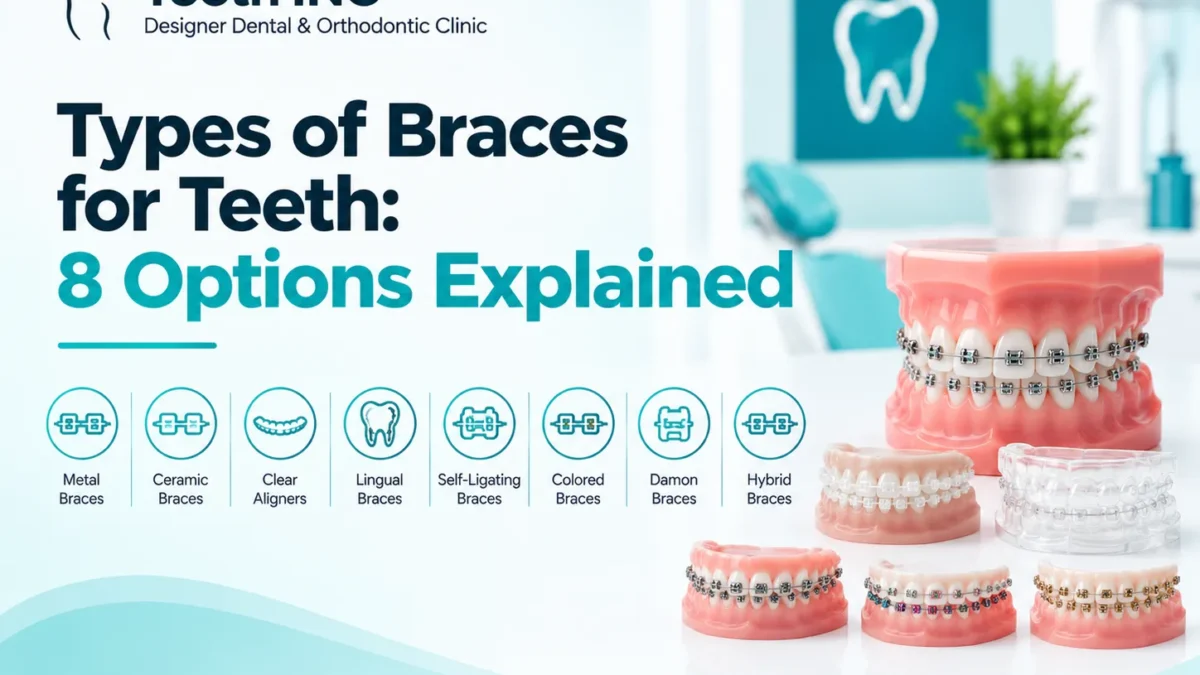
Below is an expert breakdown of the eight leading modern orthodontic systems, outlining how each mechanism operates, their clinical strengths, and which option matches your daily routine.
Understanding Different Types of Braces in Modern Orthodontics
Orthodontic science relies on continuous, gentle force to remodel the periodontal ligament and alveolar bone around teeth. While the underlying biological principles remain constant, bracket engineering, material science, and aesthetic visibility differ significantly.
Evaluating the different types of braces involves comparing clinical severity, personal lifestyle demands, daily maintenance requirements, and aesthetic preferences. Working professionals often favor low-profile or fully invisible designs, whereas parents seeking treatment for teenagers frequently prioritize durability and mechanical resilience. An initial assessment with an MDS orthodontist provides digital scans to identify your exact dental arch requirements before choosing a treatment path.
1. Traditional Stainless Steel Braces
Traditional metal brackets represent the foundational benchmark of modern corrective orthodontics. High-grade medical stainless steel brackets are bonded directly to the facial surfaces of your enamel and threaded with flexible archwires. Elastic ligatures, available in transparent shades or vibrant colors, secure the wire into each bracket slot.
These appliances deliver exceptional tensile strength and complete three-dimensional control over complex tooth movements. Because metal brackets are rigid and resilient, orthodontists recommend them for severe crowding, significant rotations, and complex vertical bite discrepancies.
Their visible presence remains the main drawback for adults, though modern metal brackets are noticeably smaller, flatter, and more comfortable than earlier generations.
2. Aesthetic Ceramic Braces
Aesthetic ceramic brackets offer the reliable biomechanics of traditional systems alongside visual discretion. Fabricated from polycrystalline or single-crystal alumina, these brackets match your natural enamel tone. When paired with rhodium-coated or frosted archwires, they remain discreet during everyday conversation.
They provide an ideal middle ground for university students and corporate professionals across Chandigarh who want fixed-appliance control without prominent metal. The bracket material resists surface discoloration from tea, coffee, or spices.
Patients must still clean carefully around the elastomeric ties holding the archwire, as clear elastics can collect stains between adjustment appointments. Ceramic materials are also slightly more brittle than steel, requiring deliberate food choices to prevent shearing.
3. Damon Self-Ligating Metal Braces
Damon self-ligating systems eliminate the need for elastic or metal ties. Instead, each bracket incorporates a specialized slide mechanism that holds the archwire securely in place. This design drastically reduces friction across the dental arch, enabling teeth to move with lighter, biologically friendly forces.
Reduced friction often shortens appointment intervals and creates a gentler movement experience for delicate periodontal tissues. Because there are no rubber ligatures to trap plaque, daily brushing and flossing are more straightforward.
Damon Self-ligating metal brackets are slightly more compact than conventional appliances, making them a balanced choice for individuals seeking faster chairside adjustments and efficient tooth movement.
4. Damon Clear Self-Ligating Braces
Combining aesthetic discretion with self-ligating technology, Damon Clear brackets use durable, moisture-resistant ceramic that does not yellow or absorb oral pigments. The integrated slide gate holds the wire without external elastomeric bands, keeping the bracket body transparent throughout your treatment journey.
This system delivers broad arch development and profile enhancement without visible hardware. For adults focused on workplace aesthetics, Damon Clear preserves your professional presence while treating bite misalignments efficiently. The absence of ties reduces food accumulation, making maintenance simple for busy schedules.
5. Advanced Pitts 21 Aesthetic Braces
The Pitts 21 system represents a modern breakthrough in facial aesthetics and smile-arc protection. Engineered with a unique 0.021-inch square slot, this self-ligating bracket provides early three-dimensional torque control. Conventional brackets often tilt front teeth inward, but Pitts 21 positions brackets closer to the gumline to create a wide, radiant smile arc that follows your lower lip contour.
This approach creates full, natural smiles that enhance overall facial aesthetics. Available in both metallic and translucent ceramic finishes, Pitts 21 bracket systems utilize gentle continuous forces to achieve balance and symmetry with fewer appointments. It is a preferred choice for patients who want noticeable aesthetic refinement and smile harmony.
6. Concealed Lingual Braces
Concealed lingual appliances attach to the lingual (inner) surfaces of the teeth facing the tongue, leaving the front enamel untouched. Each bracket is custom-cast to fit the unique anatomy of your inner tooth surfaces.
Because the brackets sit entirely behind the teeth, they provide complete visual discretion for public speakers, models, and image-conscious professionals. Lingual appliances maintain continuous mechanical control over difficult roots and rotations without compromising aesthetics.
Patients usually need one to two weeks to adapt their tongue movement and speech patterns, and maintaining plaque hygiene along the inner gum margin requires diligent use of water flossers and interdental brushes.
7. Custom Incognito Hidden Braces
Incognito teeth braces refine lingual orthodontics with robotic manufacturing and computer-aided design (CAD/CAM). Each gold-alloy bracket is custom-milled to sit flush against the lingual contours of your enamel, creating a flatter, lower-profile fit than standard lingual systems.
The low-profile design minimizes tongue irritation and helps patients maintain natural speech from day one. Robotic archwire bending ensures predictable, precise force delivery tailored to your anatomy. The gold-alloy composition is completely biocompatible, making it an excellent option for patients sensitive to base metals who want invisible, fixed orthodontic correction.
8. Clear Invisalign Aligners
Invisalign clear aligners replace fixed brackets and wires with a sequential series of custom-formed, medical-grade thermoplastic trays. Clinicians use digital 3D scans to map your complete tooth movement path from initial positioning to final alignment. Each aligner applies calibrated, isolated pressure to target teeth before you move to the next tray in the series.
Aligners are removable, so you can eat your regular diet without food restrictions and maintain your typical brushing and flossing routine. They are virtually invisible, making them popular among adults, active individuals, and frequent travelers.
Successful aligner therapy requires personal discipline: trays must be worn 20 to 22 hours daily, coming out only for meals and oral hygiene.
Comparing the Leading Braces and Aligners
| Orthodontic System | Visibility Level | Primary Bracket / Tray Material | Best Suited For | Maintenance Complexity |
| Traditional Metal | High | High-tensile stainless steel | Severe crowding, bite realignment, all age groups | Moderate; requires dedicated flossing around elastics |
| Aesthetic Ceramic | Low | Polycrystalline / single-crystal ceramic | Adults & teens prioritizing low-profile aesthetics | Moderate; elastics require careful dietary care |
| Damon Metal | Moderate | Friction-free stainless steel slide | Efficient alignment with easier hygiene | Low to moderate; no elastic bands |
| Damon Clear | Very Low | Non-staining aesthetic ceramic slide | Professionals wanting invisible passive alignment | Low; minimal plaque traps |
| Pitts 21 System | Low to Moderate | Precision aesthetic or metal square-slot | Enhancing smile-arc geometry & facial harmony | Low to moderate; light-force engineering |
| Standard Lingual | Invisible | Laboratory-adapted metal alloy | Individuals needing total bracket concealment | High; requires focused inner-arch cleaning |
| Custom Incognito | Invisible | CAD/CAM custom-milled gold alloy | Premium invisible alignment with high tongue comfort | High; requires water flossing & detail cleaning |
| Invisalign Aligners | Virtually Invisible | SmartTrack medical thermoplastic | Lifestyle-driven aesthetics, mild to complex cases | Low; removable for routine brushing |
Clinical Factors When Selecting Types of Braces for Teeth
Every dental arch presents unique physiological requirements. The best orthodontic path depends on several key clinical considerations:
- Skeletal and Dental Complexity: Mild spacing or aesthetic crowding responds readily to clear aligners or ceramic systems. Significant skeletal imbalances, severe crossbites, or impacted canines may benefit from the continuous three-dimensional anchorage of fixed brackets.
- Aesthetic Demands: Your professional environment matters. If public speaking or client presentations make visible metal less ideal, Invisalign, Incognito, or Damon Clear systems keep your treatment private.
- Compliance and Daily Routine: Removable aligners require consistent personal accountability. If you are concerned about losing trays or forgetting to wear them 22 hours a day, fixed brackets work continuously in the background without daily intervention.
- Oral Hygiene Commitment: Fixed brackets require careful plaque management with specialized interdental brushes and water flossers. Self-ligating models reduce bracket debris, while aligners allow normal oral hygiene.
Specialist Orthodontic Care at ToothInc Chandigarh
Achieving an aligned bite requires specialized clinical diagnostic planning. At ToothInc, situated in Sector 18, Chandigarh, orthodontic therapy begins with advanced 3D and 5D digital scans rather than messy traditional impression pastes. Specialist orthodontist Dr. Karan Seth (MDS) plans each movement path to preserve your natural smile arc and facial proportions.
ToothInc provides an anxiety-free boutique setting that removes the clinical stress from dental appointments. With calming interiors, curated music, and high-standard sterilization protocols, your adjustment visits remain relaxing and comfortable. Whether you choose custom Incognito appliances, Pitts 21 brackets, or Invisalign aligners, your smile journey is tailored to your lifestyle.
Begin Your Orthodontic Journey With Toothinc
Choosing the right orthodontic system is a lasting investment in your health, facial balance, and everyday confidence. A comprehensive orthodontic evaluation reveals your exact tooth positions and bone structure, helping you select a system that fits your routine and personal goals.
Connect with Dr. Karan Seth and the team at ToothInc to evaluate your alignment options with advanced digital diagnostics. Book your consultation in Sector 18, Chandigarh, and take the first step toward a radiant, healthy smile.
Conclusion
Investing in an orthodontic journey is one of the most effective ways to preserve long-term oral health, correct bite function, and build lasting self-assurance. Every bite profile and lifestyle is distinct, meaning the ideal appliance depends on your daily schedule, aesthetic priorities, and dental alignment goals.
Modern digital orthodontics makes this journey transparent and stress-free. Whether you prefer the subtle profile of ceramic brackets, the precision engineering of Pitts 21, or the removable convenience of clear aligners, expert guidance ensures predictable, comfortable results.
Frequently Asked Questions
1. Which types of braces work fastest for crooked teeth?
Self-ligating systems like Damon and Pitts 21 often reduce overall treatment time by lowering mechanical friction. Actual treatment duration always depends on bone density, age, and misalignment severity.
2. Can adults get ceramic braces or clear aligners later in life?
Yes, orthodontic movement relies on the health of your periodontal ligament and jawbone, not your age. Adults can achieve excellent alignment and bite function using ceramic brackets, lingual systems, or clear aligners.
3. Are self-ligating braces better than traditional metal braces?
Self-ligating brackets remove elastic ties, reducing friction, easing oral hygiene, and lowering chairside adjustment times. However, both systems deliver reliable force application for complex orthodontic corrections.
4. How do I prevent stains on ceramic braces?
While ceramic brackets resist staining, clear elastic ligatures can discolor from turmeric, coffee, red wine, and smoking. Brushing after meals and scheduling regular wire adjustments keeps them looking clean and fresh.
5. What are the main benefits of Pitts 21 braces?
Pitts 21 brackets focus on facial balance and smile-arc protection. By placing brackets closer to the gumline and using light forces, this system broadens dental arches and creates a natural, youthful smile curve.
6. Are lingual and Incognito braces completely hidden from view?
Yes, lingual and Incognito systems attach to the back surface of your teeth facing the tongue. They correct complex misalignments without any visible hardware on your outer enamel.