A bright, confident smile can change how you feel every single day. Yet teeth whitening often leaves people confused. The market is packed with kits, pastes, and home hacks. Some deliver real results. Many simply do not.
This honest guide cuts through the noise around teeth whitening. You will learn what actually works, what to skip, and how to brighten your smile safely. Everything here is simple, practical, and backed by proven dental science.
Teeth Whitening Basics: How the Process Works
Teeth whitening is a cosmetic dental process. It lightens the natural colour of your teeth. Most stains form slowly over the years.
Common culprits include coffee, tea, tobacco, red wine, and dark-coloured foods. Whitening works by using safe bleaching agents that break these stains apart.
The two main whitening agents are:
- Hydrogen peroxide – acts quickly and lifts stains fast.
- Carbamide peroxide – works more slowly and gently over time.
These agents break stain molecules into smaller pieces. Your teeth then look cleaner and brighter. Many cheap products skip these agents, which is why they often fail.
Effective Teeth Whitening Methods That Deliver Results
There are several effective teeth whitening methods available today. Some are done in a clinic. Others can be used at home. Each option differs in strength, speed, and safety.
Teeth Whitening at Dentist: In-Clinic Treatment
Teeth whitening at dentist clinics is the gold standard. A trained dentist applies a professional-grade gel. A special light may be used to speed things up.
Key benefits include:
- Visibility results in a single sitting.
- Safe, controlled application.
- Custom care for sensitive teeth.
Custom Take-Home Whitening Kits
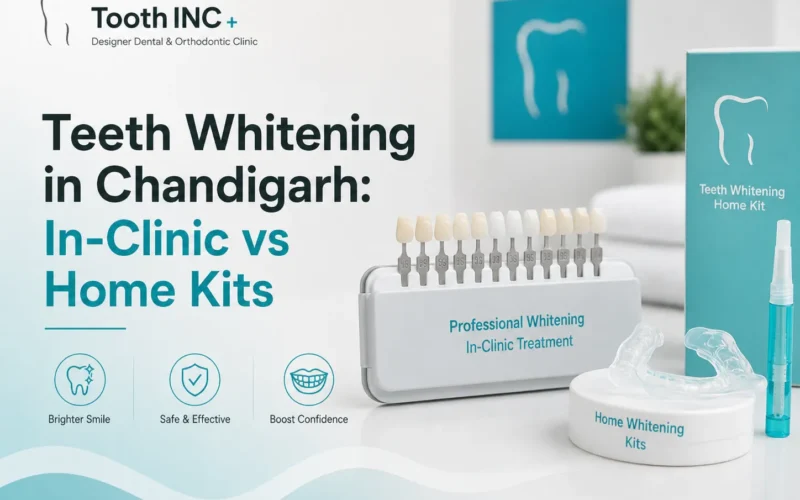
Many clinics also offer custom take-home kits. Your dentist prepares trays that fit your teeth exactly. You then apply a measured gel at home over a few days.
These kits are both safe and reliable. They work slower than in-clinic sessions. However, the results look natural and even.
Over-the-Counter Strips and Gels
Whitening strips and gels are sold everywhere. They contain weaker bleaching agents. They can help with mild surface stains only.
Results usually take several weeks. Uneven whitening is common. They rarely match professional teeth whitening in quality.
The Most Effective Teeth Whitening Treatment for Fast Results
For most people, the most effective teeth whitening treatment is in-clinic professional whitening. It uses higher, carefully controlled concentrations of peroxide. A dentist supervises the entire process.
This is also the fastest way to whiten teeth. You can often see a noticeable improvement in about an hour. There is less guesswork and far lower risk.
At-home methods can still help. They are simply slower and less predictable than a professional session.
Professional vs At-Home Teeth Whitening
Both professional and at-home teeth whitening have their place. The right pick depends on your goals, your time, and the type of stain you have.
- In-clinic teeth whitening – best for fast, dramatic results.
- Custom take-home trays – good for gradual, gentle whitening.
- Store-bought products – suitable only for very mild stains.
For deep or stubborn stains, professional teeth whitening remains the smartest and safest choice.
Ideal Candidates for Teeth Whitening
Teeth whitening suits most healthy adults with stained natural teeth. Still, it is not right for everyone. A quick dental check helps you decide.
Teeth whitening usually works best for people who:
- Have yellow or lightly stained natural teeth.
- Keep their gums and teeth healthy.
- Have no untreated cavities or gum disease.
People with heavy decay, thin enamel, or many crowns may need other treatments first. Pregnant women are usually advised to wait. Your dentist will confirm whether teeth whitening is a safe choice for you.
The Teeth Whitening Process, Step by Step
A professional teeth whitening session is simple and comfortable. Knowing the steps can ease any nerves you may have.
- Your dentist first checks your teeth and gums.
- A cleaning removes plaque and surface build-up.
- A protective barrier shields your gums.
- The whitening gel is applied to your teeth.
- A light may activate the gel for faster results.
The whole teeth whitening visit often takes under an hour. You usually walk out with a visibly brighter smile the very same day.
Popular Whitening Myths That Simply Don’t Work
The internet is full of “natural” whitening tricks. Many sound harmless. Some can actually damage your teeth.
Common methods that do not truly work include:
- Charcoal powder – abrasive and can scratch enamel.
- Baking soda scrubs – may wear down the tooth surface over time.
- Lemon or vinegar – acids that erode protective enamel.
- Oil pulling – no proven whitening effect.
- Whitening toothpaste alone – removes only light surface stains.
These options seem cheap and easy. In reality, they rarely give true whitening. Worse, a few can cause long-term harm.
Stains That Do Not Respond to Teeth Whitening
Not every stain reacts the same way. Dentists usually group tooth stains into two types.
- Extrinsic stains – sit on the surface from food and drinks. These whiten well.
- Intrinsic stains – lie deep inside the tooth. These are harder to treat.
Intrinsic stains come from ageing, injury, or certain medicines. Bleaching may not fully remove them. In such cases, veneers or bonding often work better.
Remember, crowns, fillings, and veneers do not whiten at all. Only your natural teeth respond to bleaching.
Teeth Whitening Safety and Enamel Care
A common worry is enamel damage. Professional teeth whitening is safe when carried out correctly. It does not strip away or destroy your enamel.
Mild sensitivity can happen for a short while. It usually settles on its own. A dentist can adjust the treatment to keep you comfortable.
Most problems come from misuse. Overusing home kits or abrasive hacks can harm teeth. Proper guidance keeps the whole teeth whitening process safe.
Making Your Teeth Whitening Results Last
Teeth whitening is not permanent. Results typically last several months to a couple of years. Good daily habits help them last much longer.
Simple ways to protect your bright smile:
- Cut back on coffee, tea, and red wine.
- Avoid tobacco in every form.
- Brush and floss twice a day.
- Rinse your mouth after staining drinks.
- Visit your dentist for regular cleanings.
Brighten Your Smile With Expert Care
Ready to transform your smile with safe, expert care? At ToothInc Dental Clinic, our specialists offer professional teeth whitening in Chandigarh customized to your smile. We focus on comfort, safety, and natural-looking results.
Book your consultation today and smile with confidence.
Conclusion
Teeth whitening truly works when you choose the right method. Professional treatments give the safest, fastest, and longest-lasting results. Cheap hacks often disappoint or even damage your teeth.
Always speak with a qualified dentist before you start. The right teeth whitening plan protects both your smile and your investment.
Frequently Asked Questions
Does teeth whitening damage tooth enamel?
No. Professional teeth whitening is safe for enamel when done by a dentist. Mild, temporary sensitivity may occur, but it usually fades quickly.
How long do teeth whitening results last?
Results usually last six months to three years. It depends on your diet, oral hygiene, and habits like smoking or drinking coffee and tea.
What is the fastest way to whiten teeth?
The fastest way to whiten teeth is in-clinic professional whitening. A dentist can brighten your smile by several shades in about one hour.
Is teeth whitening at dentist clinics better than home kits?
Yes. Teeth whitening at dentist clinics uses stronger agents and expert control. It gives faster, safer, and more even results than most home kits.
Can whitening work on crowns or veneers?
No. Teeth whitening only lightens natural teeth. Crowns, veneers, and fillings keep their original colour and may need replacement to match.
Is teeth whitening painful?
Teeth whitening is not usually painful. Some people feel mild sensitivity during or after treatment. This is temporary and settles within a day or two.