

A straight smile boosts confidence, enhances facial aesthetics, and improves long-term oral health. Selecting the ideal orthodontic treatment remains a pivotal decision for teenagers, working professionals, and adults across the Tricity region.
With modern advancements in dentistry, patients are no longer limited to standard metal brackets. Today, clear aligners offer a highly discreet alternative. When comparing Invisalign vs braces, understanding how each option impacts daily life, aesthetics, and treatment timelines helps you make an informed choice tailored to your unique lifestyle.
Difference Between Invisalign and Braces for Daily Life
The fundamental difference between Invisalign and braces lies in design, application, and daily wearability.
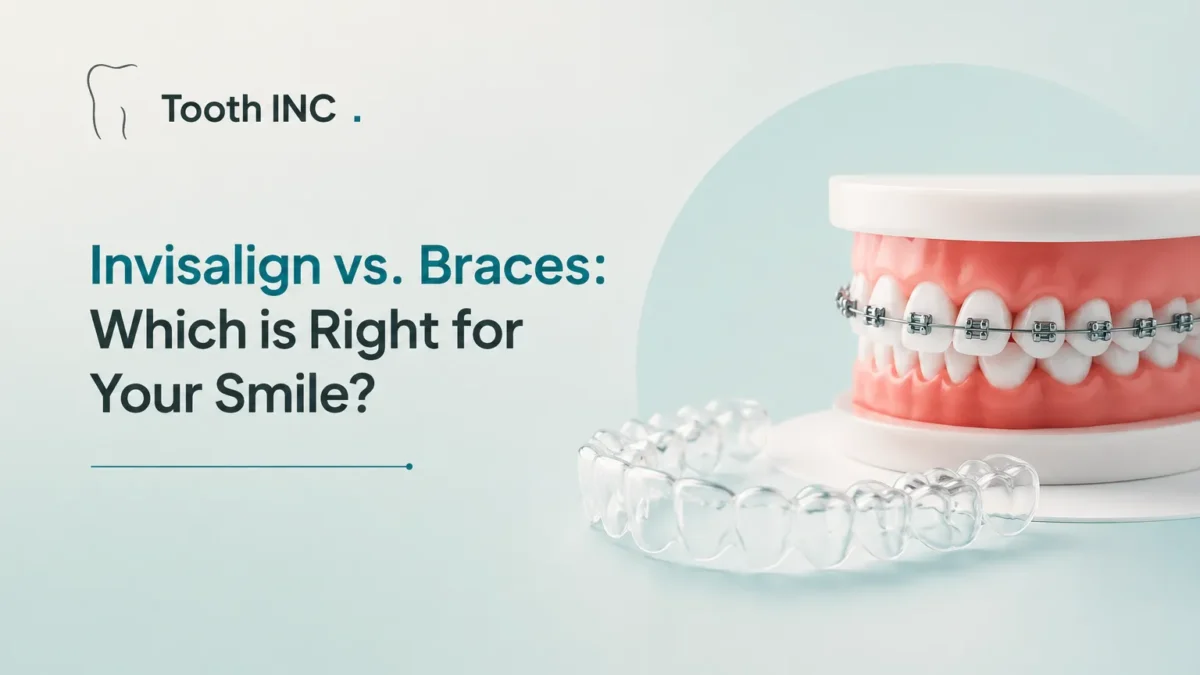
Traditional braces consist of metal or ceramic brackets bonded directly to the surface of the teeth, connected by archwires and small elastic bands. These fixtures remain permanently attached throughout the treatment process and are periodically adjusted by an orthodontist to guide tooth movement.
Invisalign utilizes a series of custom-molded, medical-grade clear plastic trays that fit snugly over your teeth. These clear aligners apply precise pressure to shift teeth into their ideal alignment. Because aligners are virtually invisible, they are widely preferred by working adults and young professionals seeking a subtle orthodontic journey.
Lifestyle flexibility represents another key distinction. Braces remain fixed in place, requiring patient mindfulness when consuming hard or sticky foods to protect brackets from snapping. Invisalign aligners are completely removable. You simply remove the aligner trays before eating, drinking, brushing, or flossing, allowing you to enjoy your favorite meals without dietary restrictions.
Invisalign vs Braces Pros and Cons Explained
Evaluating Invisalign vs braces pros and cons highlights the practical benefits and considerations of each system.
Advantages of Invisalign
- Discreet Aesthetics: Transparent aligner trays make the treatment nearly unnoticeable during daily interactions.
- No Dietary Restrictions: Removable aligners allow you to enjoy all types of food without risking damage to wires or brackets.
- Simplified Oral Hygiene: Brushing and flossing require no specialized threaders, making routine cleaning quick and effective.
- Enhanced Comfort: Smooth medical-grade plastic minimizes mouth sores, cheek irritation, and gum discomfort.
Considerations for Invisalign
- Strict Discipline Needed: Trays must be worn for 20 to 22 hours daily to maintain planned progress.
- Higher Initial Investment: Advanced 3D digital planning and custom fabrication technology generally increase overall cost compared to standard metal braces.
Advantages of Fixed Braces
- Universal Application: Highly effective for resolving severe bite misalignments, complex crowding, and rotated teeth.
- No Compliance Worries: Fixed brackets work continuously 24/7 without requiring the patient to track daily wear time.
- Budget-Friendly Options: Traditional metal braces provide a reliable, cost-effective orthodontic solution.
Considerations for Fixed Braces
- Noticeable Appearance: Brackets and archwires remain visible during speech and smiling.
- Food Restrictions: Sticky, hard, or chewy foods must be avoided to keep brackets intact.
- Meticulous Cleaning Required: Cleaning around brackets demands extra time and specialized flossing tools.
Clear Aligners vs Braces for Complex Dental Conditions
Deciding between clear aligners vs braces depends heavily on your specific orthodontic requirements.
Clear aligners excel at correcting mild to moderate crowding, spacing gaps, and minor bite misalignments. Advanced digital intraoral scanners create precise 3D digital maps of your mouth, allowing specialist orthodontists to simulate tooth movements from start to finish before treatment even begins.
For complex clinical conditions—such as severe overbites, deep underbites, extensive rotational shifts, or significant vertical movements—fixed braces offer unrivaled mechanical leverage. Brackets allow orthodontists to apply controlled, multidirectional forces directly to individual teeth, ensuring predictable corrections even in challenging cases.
Invisalign vs Braces Treatment Time Factors
Patients frequently evaluate Invisalign vs braces treatment time when planning their smile journey.
Orthodontic treatment timelines depend on case complexity, individual bone physiology, and patient compliance.
- Invisalign Duration: For mild to moderate alignment needs, treatment typically ranges from 6 to 18 months. However, sticking strictly to the 20 to 22-hour daily wear target is essential; taking aligners out for extended periods can delay progress.
- Braces Duration: Traditional braces usually require 12 to 24 months for complete alignment. Because braces remain attached around the clock, progress continues continuously without relying on daily discipline.
Regular review check-ups allow your orthodontist to track tooth movement and make necessary wire adjustments or issue new aligners.
Invisalign vs Braces Cost Considerations
Evaluating the Invisalign vs braces cost involves weighing long-term benefits, custom technology, and individual treatment goals.
Traditional metal braces remain the most accessible financial option, making them a popular choice for families and students. Aesthetic variations, such as tooth-colored ceramic brackets, carry a slightly higher cost due to their discreet materials.
Invisalign and premium clear aligner systems reflect a higher financial investment. This cost accounts for advanced 3D intraoral imaging, customized software planning, medical-grade thermoplastic materials, and specialized aligner tray manufacturing.
Many modern dental practices offer flexible interest-free monthly installment plans (EMIs), making both treatments manageable across various budgets.
Invisalign or Braces Which is Better for Your Needs
Deciding whether Invisalign or braces which is better relies on your personal priorities, daily routine, and clinical needs.
Invisalign is ideal if you:
- Prefer a virtually invisible aesthetic during meetings or social gatherings.
- Want complete freedom to eat without dietary limitations.
- Maintain the personal discipline required to wear aligners consistently.
- Seek an easy brushing and flossing routine.
Fixed braces are ideal if you:
- Require correction for severe crowding or complex bite misalignments.
- Prefer a low-maintenance option without tracking daily wear hours.
- Want an effective, budget-conscious orthodontic solution.
At ToothInc Dental Clinic the specialist team provides comprehensive orthodontic evaluations using advanced 3D digital imaging. Patients receive personalized, transparent guidance without pressure or upselling, ensuring the chosen treatment aligns perfectly with their lifestyle.
Begin Your Transformation at ToothInc
Achieve a radiant, healthy smile with expert, personalized orthodontic care at ToothInc Dental Clinic. Whether you prefer clear aligners or modern braces, our specialist-led team delivers precise, painless, and anxiety-free dental treatments in a welcoming environment.
Book Your Consultation Today!
Visit ToothInc Dental Clinic in Chandigarh or call to schedule your comprehensive 3D digital assessment. Let us help you smile without holding back!
Conclusion
Choosing between Invisalign vs braces comes down to balancing your aesthetic preferences, case complexity, and daily habits. Both options deliver long-lasting orthodontic results when planned and monitored by an experienced specialist. Scheduling an evaluation with a certified orthodontist is the best step toward determining the ideal treatment path for your smile.
Frequently Asked Questions:
Is Invisalign faster than traditional braces?
Invisalign can deliver faster results for mild alignment issues, often completing in 6 to 18 months. However, complex bite corrections may require traditional braces for effective, long-term stabilization.
How many hours a day must Invisalign be worn?
Invisalign aligners must be worn for 20 to 22 hours daily. They should only be removed during meals, drinking hot beverages, brushing, and flossing.
Do clear aligners cause pain or speech lisps?
Aligners cause mild pressure for 1 to 2 days after switching to a new tray. A temporary, minor lisp may occur initially but fades quickly as speech adapts.
Can I eat with Invisalign trays in my mouth?
No, aligners must always be removed before eating or chewing food to prevent warping, staining, or damaging the medical-grade plastic material.
Are traditional braces more effective for complex bite issues?
Yes, traditional braces provide superior mechanical leverage, making them the preferred choice for correcting severe overbites, underbites, deep crowding, and structural rotations.